Published: June 1, 2026
We often associate revolutions with noise. Protests, disruptions, breaking headlines. But not all revolutions are loud. Some unfold quietly, behind screens, within code, and across platforms, until one day, everything is different, and we wonder how we ever lived without it.
That’s exactly what’s happening with fintech.
The real surprise isn’t how advanced the technology is. It’s how normal it already feels. Fintech didn’t arrive with a bang. It integrated itself into habits. It redefined expectations. It made us question things we used to accept without thought, waiting in lines, filling out forms, and being told when and how we can access our own money.
What’s made this transformation so powerful isn’t just speed or simplicity. It’s the way fintech meets people where they are. It doesn’t demand adaptation; it anticipates it. Whether someone is a freelancer trying to manage irregular income, a student exploring digital investing, or a retiree sending money to family abroad, the tools being built today reflect real needs, not hypothetical ones.
This responsiveness has become fintech’s greatest strength. It doesn’t follow old rules. It rewrites them. And in doing so, it challenges the entire financial sector to let go of tradition for the sake of relevance.
Of course, the change hasn’t been seamless. There are still questions around regulation, data privacy, digital identity, and trust. But these aren’t reasons to resist fintech. There are reasons to shape it with care. To build guardrails, not walls. To evolve responsibly instead of clinging to what’s familiar.
Because the momentum is unstoppable.
Every time a new digital product launches that cuts down hours of work to a few taps, every time a person outside the banking system gains access through their phone, every time a young entrepreneur builds a financial tool without being part of a traditional institution, fintech grows more rooted in our daily experience. And what’s remarkable is that most people don’t even call it “fintech” anymore. They just call it normal
This normalization is the real proof that the future has arrived. It’s no longer about potential. It’s about presence. Fintech isn’t a side note to the industry; it’s the new language of it. And the longer we treat it like a concept to be debated rather than a foundation to build upon, the more disconnected we become from what consumers actually want.
The companies and leaders that thrive in this new world won’t be the ones with the flashiest features or the biggest budgets. They’ll be the ones who understand that technology is only powerful when it’s purposeful. That trust isn’t built through legacy, it’s earned through experience. And that evolution doesn’t start with systems. It starts with people.
So the question is no longer “Is fintech the future?”
The question is: “Are we ready to lead in the now?”
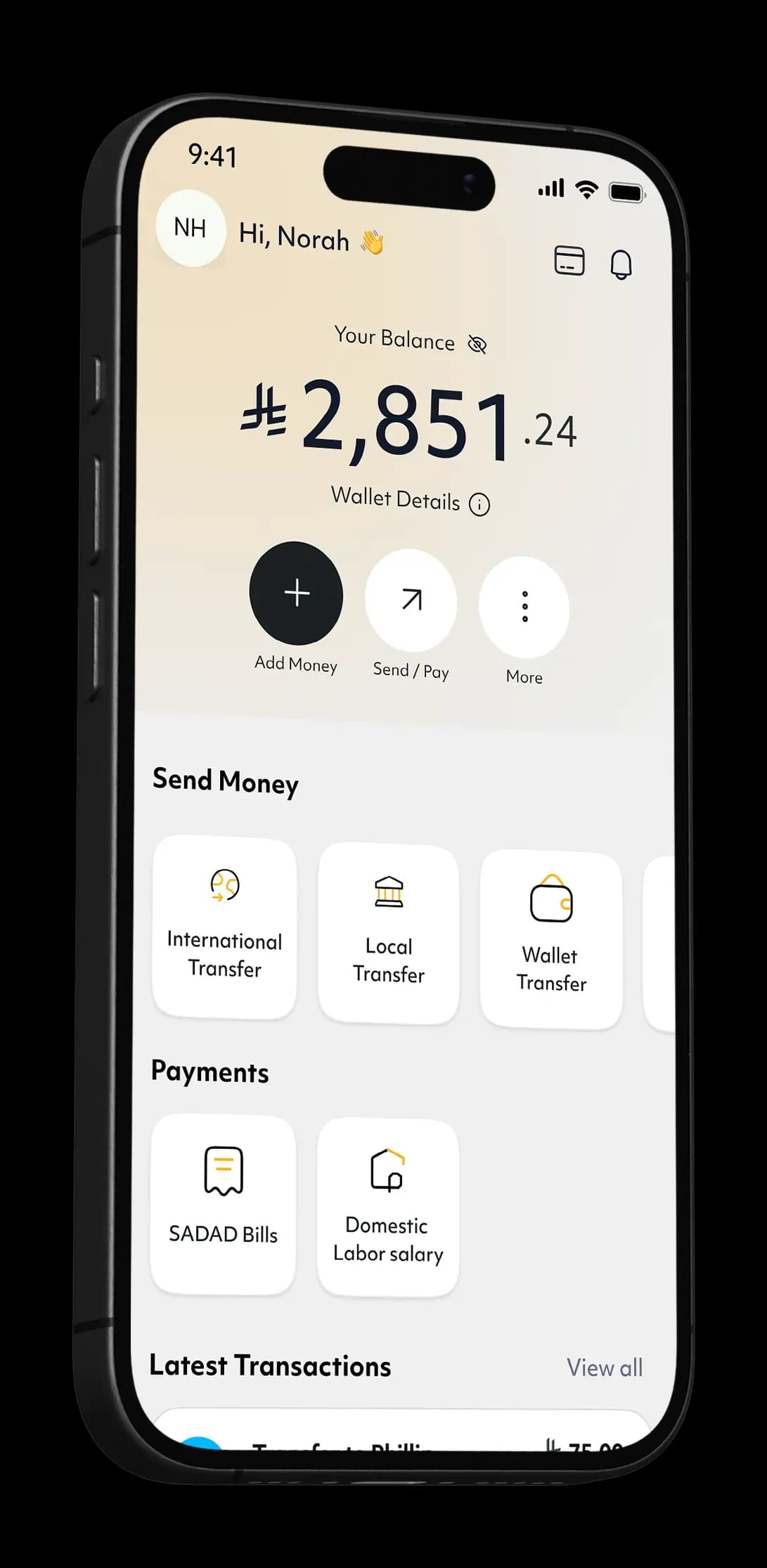
One tap. One app.Enjaz Pay App